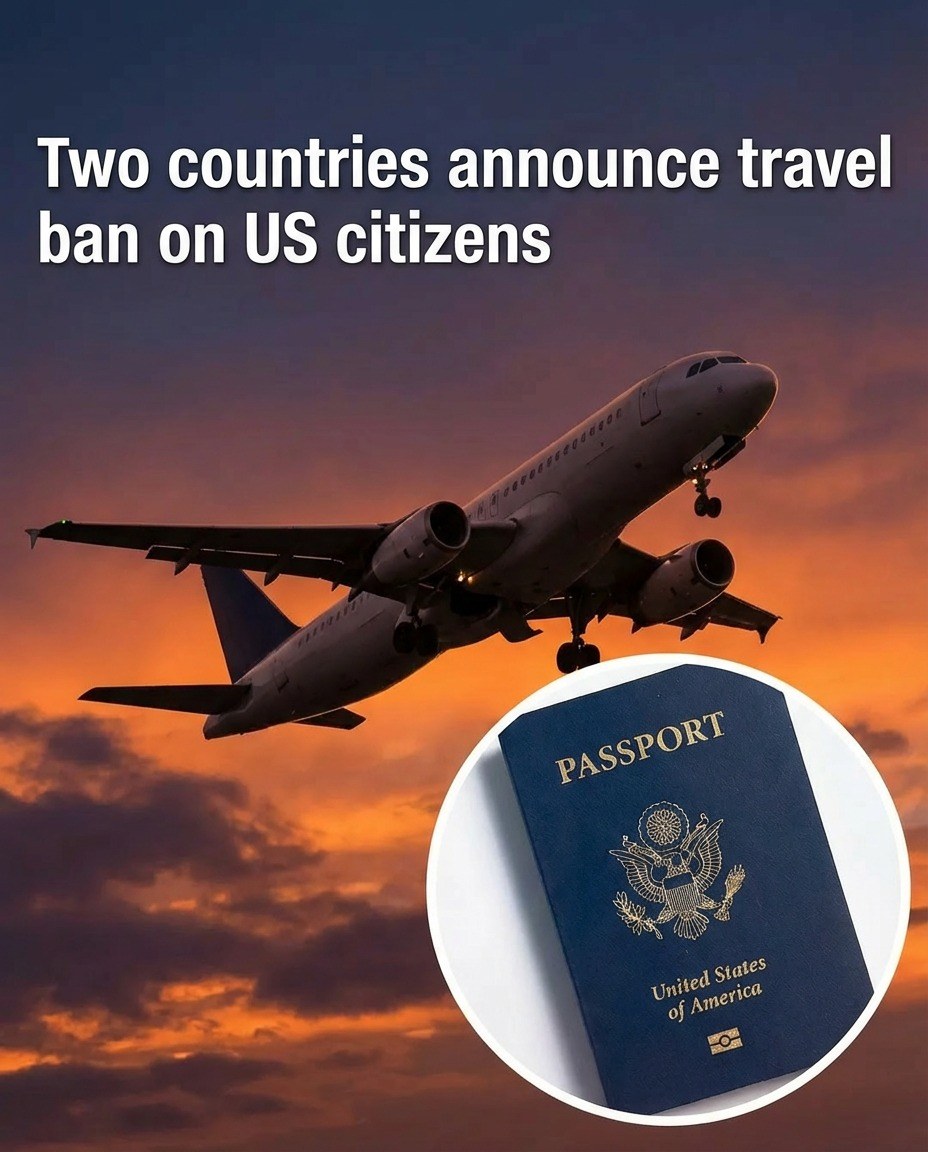
Two Countries Revise Entry Requirements for U.S. Travelers, Reflecting Changes in Global Travel
International travel regulations frequently shift in the shadows, tucked away in the dense prose of embassy advisories or consular fine print. Yet, every so often, a change in visa policy resonates with the clarity of a diplomatic broadcast—a signal that transcends mere border logistics to touch on the raw nerves of national sovereignty, power dynamics, and the cold logic of reciprocity.
Recent developments affecting U.S. passport holders across the Sahel region of West Africa provide a masterclass in how global mobility has been weaponized as a tool of statecraft. What may seem like routine administrative friction is, in fact, a high-stakes dialogue about fairness. In an era where political alliances are in a state of flux, access to a nation’s territory is no longer a given; it is a leveraged asset.
Niger’s Gambit: The Doctrine of Reciprocity
In Niger, the recent suspension of visa issuance for U.S. citizens has sent ripples through the diplomatic community. Authorities were surgical in their framing, presenting the move not as a spontaneous act of retaliation, but as a formal application of reciprocity. The message was a direct response to U.S.-imposed restrictions on Nigerien officials following recent internal political upheavals.
By leaning on the principle of parity, Niger is asserting its status as a sovereign equal. The diplomatic subtext is clear: if one nation restricts the movement of another’s officials, it must be prepared for its own citizens to face the same barriers. In the Sahel’s current climate—defined by a growing skepticism of Western influence—this assertion of dignity carries significant weight. While visa reciprocity is a long-standing tool of international relations, its application here reflects a broader regional pivot toward independence from traditional Western mandates.
The Sahelian Shift: Discretion as a Barrier
Beyond Niger’s formal ban, a more subtle and complex reality is unfolding in Mali and Burkina Faso. While no outright prohibitions have been announced, U.S. travelers are encountering a “gray zone” of increased scrutiny. This manifests in protracted processing times, demands for exhaustive documentation, and rigorous questioning at ports of entry.
These measures are rarely publicized as blanket policies. Instead, they operate through the “discretion” of border officials, often citing security assessments and regional instability. For researchers, aid workers, and families, this creates a landscape of deep uncertainty. Entry is no longer a routine formality; it is a case-by-case negotiation. As political priorities in Bamako and Ouagadougou shift, the mechanisms of foreign access are being tightened to reflect a new, more guarded diplomatic posture.
The View from Washington vs. The Local Reality
From the perspective of the U.S. State Department, visa restrictions are typically characterized as neutral, administrative tools linked to global security standards or governance benchmarks. Official rhetoric often stresses that these policies are designed to protect national interests rather than punish ordinary citizens.
However, this explanation frequently falls flat in West Africa. Local leaders and commentators point to a fundamental imbalance: while Western citizens have historically enjoyed frictionless global mobility, travelers from developing nations have long faced an uphill battle for access. When the U.S. implements “security-based” restrictions, it is often perceived in the region as a reinforcement of a lopsided global hierarchy.
The Human Toll of Border Friction
While the language of diplomacy is often sterile, the consequences are deeply personal. The tightening of these borders has a tangible impact on:
-
Humanitarian Aid: Vital relief efforts are stalled by unpredictable visa approvals.
-
Academic Exchange: Researchers and journalists find their access to critical regional developments curtailed.
-
Families: Individuals separated by borders face increased costs and emotional strain due to delays.
-
Economic Ties: Business travelers must navigate a fragile and unpredictable investment climate.
In regions like the Sahel, where international collaboration is essential for development, restricted mobility doesn’t just affect the traveler; it affects the community they serve.
Visas as Political Barometers
Historically, a visa was a tool of immigration control; today, it is a barometer of political alignment. When relations are robust, borders are porous. When trust erodes, the gates narrow. Niger’s move to mirror U.S. policy reflects a broader trend of developing nations seeking greater leverage in a system traditionally dominated by Western powers.
History, however, suggests that these barriers are rarely permanent. In the past, nations like Chad have adjusted visa requirements during periods of tension, only to relax them as diplomatic dialogues matured. Because visa policies do not require legislative overhauls, they remain one of the most flexible tools in the diplomatic kit—tightened during a “reassessment” and loosened once trust is rebuilt.
A New Era of Global Mobility
At its core, the friction in West Africa challenges the decades-long assumption that wealthy nations hold a permanent “all-access pass” to the world. By invoking sovereignty and reciprocity, Sahelian leaders are forcing a global conversation about dignity and fairness in movement.
For the modern traveler, the takeaway is one of necessary vigilance. Navigating these regions now requires more than a valid passport; it requires flexibility, exhaustive preparation, and an awareness of the underlying political currents. As the U.S. and West Africa work to redefine their partnership, the rules of the road will continue to evolve. For now, the message from the Sahel is unmistakable: international travel is no longer just about the destination—it is a reflection of the balance of power.